Psychedelic Art
Psychedelic art is the swirling, color-clashing style of 1960s rock posters and light shows. How the posters made colors vibrate, and how light shows worked.
What is psychedelic art?
Psychedelic art is the visual style that came out of the 1960s counterculture, made to suggest or accompany the experience of LSD and other hallucinogens. It's known for swirling shapes, clashing fluorescent colors, melting lettering and patterns that seem to breathe.
Its center was San Francisco between about 1966 and 1968, where weekly rock concerts at the Fillmore Auditorium and the Avalon Ballroom each needed a new poster. Those posters, and the projected light shows inside the halls, set most of the look.
Why is the lettering so hard to read?
The difficulty was deliberate. Wes Wilson, who designed many of Bill Graham's Fillmore posters, stretched letters until they filled every curve of the space, an idea he took from Viennese Secession posters of around 1900, especially the lettering of Alfred Roller. A poster you had to puzzle over held people at the telegraph pole longer than a plain one would.
Victor Moscoso brought something else. He had studied color with Josef Albers at Yale, and he deliberately broke the rules he'd been taught, putting red against green or blue against orange at the same brightness.
Why do clashing colors seem to vibrate?
Your visual system finds edges mostly by differences in brightness, and it judges color separately and less sharply. When two strong colors have the same lightness, the brightness channel sees almost no edge between them while the color channel insists there is one.
The two signals disagree, and the boundary seems to jitter or float. Neuroscientists call these equiluminant colors. Moscoso's posters, and many op art paintings, use the effect to make a still sheet of paper buzz.
How the light shows were made
The moving blobs behind 1960s bands were done by hand with overhead projectors. A light-show artist poured mineral oil and water-based dyes into a shallow glass dish, often a large clock face, laid a second dish on top and pressed, tilted or heated it in time with the music. Oil and water don't mix, so the colors pushed against each other in bubbles that split and merged on a screen several meters wide.
Crews such as the Joshua Light Show at the Fillmore East in New York ran several projectors at once, mixing the liquid with film loops, color wheels and strobes.
Making the look
The Liquid Light Show lays oil-and-dye blobs over a photo or clip. The Big blobs preset gives the slow, fat bubbles of a single projector, and the Rainbow preset raises Dispersion so each blob fringes into spectrum colors. Lower Flow if the result is to sit behind music with a slow tempo.
For the symmetric side of the style, the Kaleidoscope Maker mirrors a picture into 2 to 12 wedges, and the Mandala Maker draws rings of petals from scratch. Give either one a hot pink and acid green of similar lightness and the edges start to vibrate the way Moscoso's did.
Try it
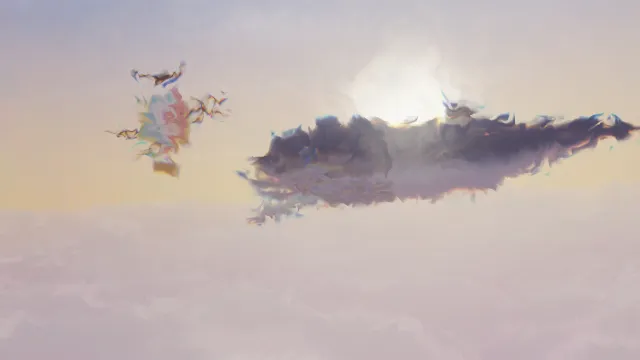
Liquid Light Show
Liquid light show effect: oil-and-water blobs of colored light swirl over a photo or video, like a 1960s concert projection. Seeded, so exports flow alike.
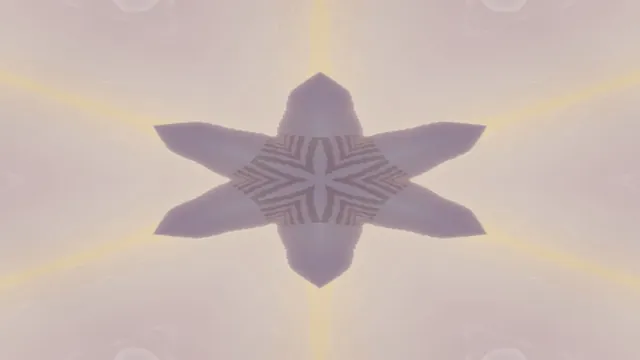
Kaleidoscope Maker
Make a symmetrical photo or video with a kaleidoscope effect: 2 to 12 mirrored wedges arranged around the center. Free, runs in your browser, saves MP4 or GIF.
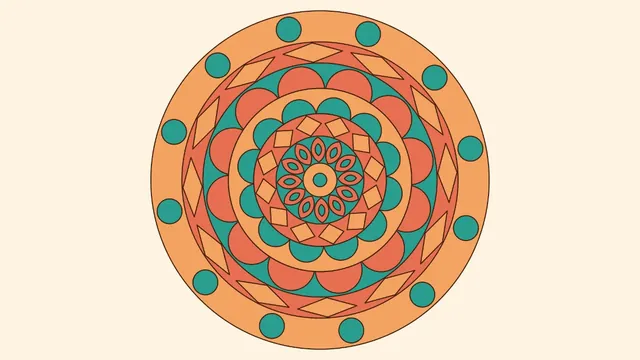
Mandala Maker
Mandala maker: rings of petals, dots and arches repeated round the center. Roll new designs, fill them with color or save line art to color in. PNG, GIF or MP4.