Pointillism
Pointillism is painting with dots of pure color that blend in the eye. What Seurat called it, why optical mixing adds no brightness, and how screens use it.
What is pointillism?
Pointillism is a painting technique in which small, separate dots or dabs of pure color sit side by side, and the colors only blend in the viewer's eye. Georges Seurat and Paul Signac developed it in Paris in the mid-1880s.
Its most famous picture is Seurat's A Sunday on La Grande Jatte, painted from 1884 to 1886 and now at the Art Institute of Chicago. The canvas is about 2 by 3 meters, so the dots that look like specks across the room are plain dabs of paint when you stand close.
Did Seurat call it pointillism?
He didn't. Seurat preferred chromoluminarism, and Signac used divisionism, a word for splitting color into its parts. Pointillism was a critics' name that fixed on the dots, and it stuck. The critic Félix Fénéon called the group the Neo-Impressionists in 1886.
Their method leaned on color science. The chemist Michel-Eugène Chevreul had published his law of simultaneous contrast in 1839, describing how neighboring colors change how each other look, and the American physicist Ogden Rood's Modern Chromatics of 1879 discussed how colors combine when seen as small separate spots.
Does optical mixing make colors brighter?
The Neo-Impressionists hoped dots of pure color would mix in the eye into something more luminous than paint mixed on a palette. Optical mixing averages the light from the dots, though, so a field of red and green dots reads as a muted, grayish yellow, about as bright as the average of the two.
What the dots do give is a shimmer. Up close the separate colors vibrate against each other, and from farther back they settle into the picture.
The Grande Jatte's colors have also changed over time. Some of Seurat's dots were zinc yellow, a pigment that turned brownish soon after he painted it. The darkening was noted as early as 1892, and conservation scientists at the Art Institute published a study of the chemistry behind it in 2011.
Where do you see pointillism today?
Every screen you own works on the pointillist idea. A phone display builds each color from red, green and blue subpixels set side by side, small enough that your eye mixes them. Four-color printing does something similar with cyan, magenta, yellow and black dots, except that those dots also overlap and mix as layered inks.
Making a pointillist picture
CMYK Halftone comes closest to Seurat's idea, because it keeps four pure inks as separate dots that only mix when you step back. Start from the Process preset and raise Size to around 14 so the dots stay visible, then lower it toward the Fine art preset's 4 to watch them melt into an ordinary photo. Halftone Generator with the Pop dots preset (Image colours, Size 18, Angle 15) gives a looser version: each dot takes the mixed color of its own patch, so the picture reads as colored confetti on paper.
Try it
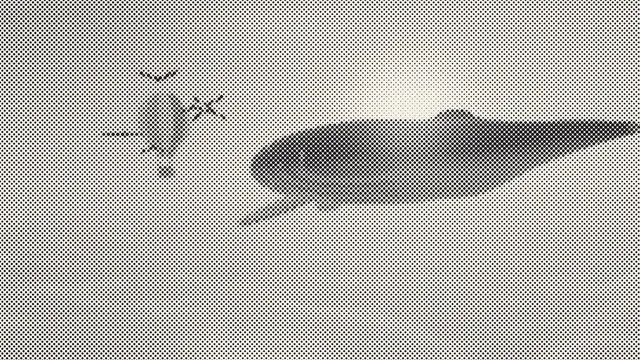
Halftone Generator
Halftone generator for images and video: dots, lines, crosses or diamonds that grow with the tone, for a printed halftone effect. Free, and nothing is uploaded.
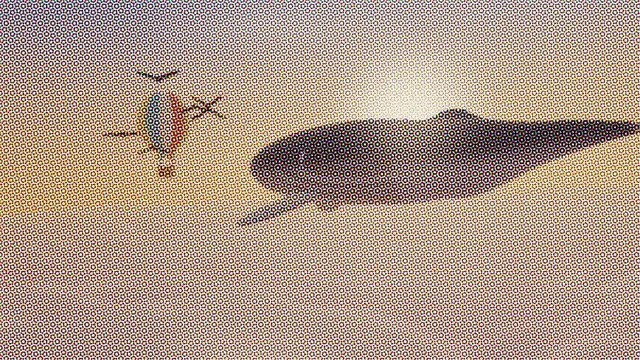
CMYK Halftone
CMYK halftone: split a picture into cyan, magenta, yellow and black dot screens at 15, 75, 0 and 45 degrees, with rosettes and dot gain. Works on video too.