Halftone
Halftone prints gray with dots of one ink that grow and shrink with the tone. How photos first reached newspapers, and why the screen is turned to 45 degrees.
What is a halftone?
A halftone is a picture printed as a grid of dots, each larger or smaller depending on how dark that spot of the image is. A press can only lay down ink or leave paper bare, so halftones are how one black ink manages to reproduce every gray in a photograph.
The name means a tone halfway between solid ink and bare paper. Look at a newspaper photo through a magnifying glass, or zoom a phone camera all the way in on one, and the smooth picture falls apart into rows of dots.
Who invented the halftone?
No single person did. William Henry Fox Talbot proposed breaking a picture up with a fabric screen in an 1852 patent. Georg Meisenbach in Munich patented a workable screen process in 1882, and in Philadelphia Frederic Ives and then the brothers Louis and Max Levy perfected the ruled glass screens the trade used for the next half century.
The first halftone photograph in a newspaper ran in New York's Daily Graphic on March 4, 1880, a view titled A Scene in Shantytown, made by the paper's Stephen Horgan. Before then, newspaper pictures were wood engravings cut by hand from a photo or sketch, so an engraver's hand always stood between the camera and the reader.
Why are halftone screens turned to 45 degrees?
People pick up horizontal and vertical lines more easily than diagonal ones, which vision scientists call the oblique effect. A one-color screen turned to 45° makes its rows hardest to notice, and that became the standard angle for black.
Color printing stacks four screens, and two screens at nearly the same angle beat against each other into a moiré. Printers keep cyan, magenta and black 30° apart, commonly at 15°, 75° and 45°, and tuck yellow in at 0°, only 15° from its neighbors, because yellow is so pale that its interference barely shows. Together the four screens form little rings called rosettes, which you can find in any magazine photo under a loupe.
How fine is a halftone screen?
Screens are measured in lines per inch (lpi), the number of rows of dots in an inch. Newsprint soaks up ink and spreads the dots, so newspapers stay coarse, roughly 85 to 100 lpi. Magazines on coated paper usually print at 133 to 150 lpi, and art books go to 175 or finer.
Prepress has a rule of thumb that the image should carry about twice as many pixels per inch as the screen has lines. A 150 lpi magazine page wants 300 pixels per inch, and that is where the familiar 300 dpi request from printers comes from.
Making a halftone
Halftone Generator screens a picture in one ink. Try the oblique effect for yourself: look at a photo at the default Angle of 45, then set Angle to 0. At 0 the dots line up into an obvious grid, and at 45 they sink back into the picture. For four colors with rosettes, CMYK Halftone puts its screens at 15, 75, 0 and 45 degrees, and its Fine art preset at Size 4 is about as small as dots get before they stop showing at all. Line Halftone swaps the dots for engraving-style lines.
Try it
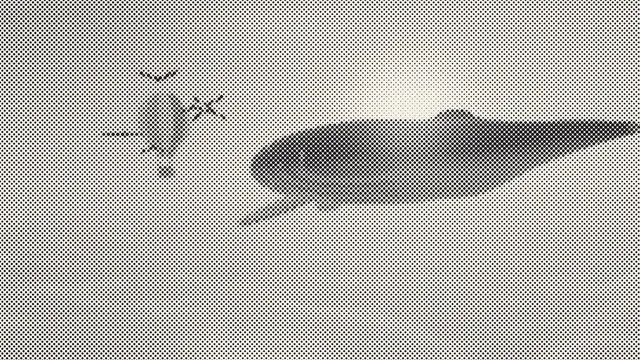
Halftone Generator
Halftone generator for images and video: dots, lines, crosses or diamonds that grow with the tone, for a printed halftone effect. Free, and nothing is uploaded.
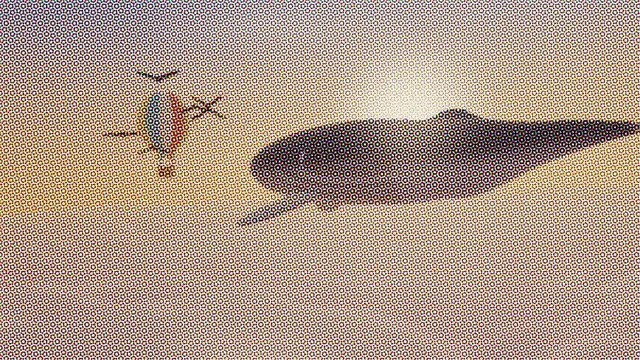
CMYK Halftone
CMYK halftone: split a picture into cyan, magenta, yellow and black dot screens at 15, 75, 0 and 45 degrees, with rosettes and dot gain. Works on video too.
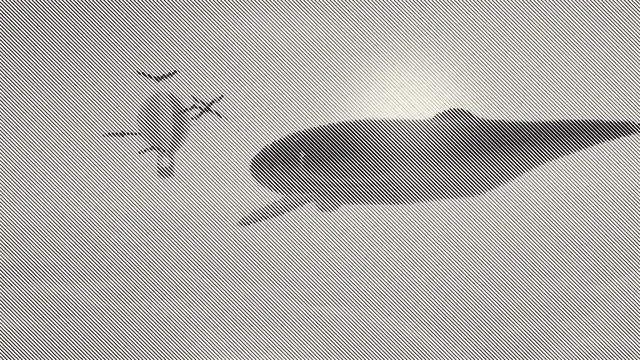
Line Halftone
Line halftone for photos and video: parallel lines that thicken in the shadows and thin out in the highlights, like an engraved print. Exports PNG, MP4 or GIF.