Crosshatching
Crosshatching is shading drawn with sets of crossing lines that darken as they pile up. Why two layers aren't twice as dark, and where to spot it in the wild.
What is crosshatching?
Crosshatching is a way of shading with lines: one set of parallel strokes for a light tone, then more sets crossing it at an angle for darker ones. From a normal viewing distance the lines blend into gray, and the closer and denser they get, the darker that gray reads.
Plain hatching uses a single direction. Crosshatching adds at least one more, usually at 45 or 90 degrees to the first. Artists use it wherever the tool can only make a solid line, such as a pen, an etching needle or an engraver's burin.
Where it comes from
Printmakers developed it out of necessity. A woodcut or a copper engraving prints pure black or nothing, so the only way to get a gray is to cut lines and let the paper show between them. Albrecht Dürer's engravings, such as Melencolia I of 1514, are full of lines that swell, taper and cross to model a face, a dog's fur or a polished sphere.
Rembrandt did the same with an etching needle, building shadows from tangled layers until they went almost black. Pen-and-ink illustrators and comic artists carried it on, and you still carry examples in your wallet: the portraits on many banknotes, the US dollar included, are line engravings shaded this way, partly because the fine crossing lines are hard to forge.
Why aren't two layers twice as dark?
Where a second set of lines crosses the first, some of its ink lands on paper that's already black, so it adds less than you'd expect. If one layer covers a fraction a of the paper, two crossing layers cover 1 minus (1 minus a) squared.
In numbers: one layer covering 30 percent of the paper, two layers 51, three about 66, four about 76. Each pass adds less, which is why artists also tighten the spacing or press harder for the deepest shadows. It's also why crosshatched shadows rarely reach full black; the last few percent of white keeps them from looking flat.
Direction matters as much as density
Lines that follow the form, curving around a cheek or an apple the way lines of latitude wrap a globe, tell you its shape as well as its tone. This is called contour hatching. Straight hatching all at one angle reads more like a flat tone or a shadow cast across the subject.
Most right-handed artists hatch from upper right to lower left, because that's the easiest stroke for the wrist. Art historians use that slant as one clue for telling Leonardo's drawings from his pupils', since Leonardo was left-handed and his hatching runs the other way.
Making crosshatching from a photo
Photo to Pencil Sketch hatches the shadows of a picture for you. Its Crosshatch checkbox, on by default, lays a second, crossing set of lines into the darkest areas only, so the midtones keep a single direction the way a draftsman would leave them. Raise Hatching toward 1 and drop Line spacing to 3 or 4 for a dense, inky look.
For a cleaner, mechanical crosshatch that reads like an engraving or a banknote, use Line Halftone and change its Shape from Line to Cross. Here the lines keep a fixed spacing and get thicker in the shadows instead of multiplying.
Try it
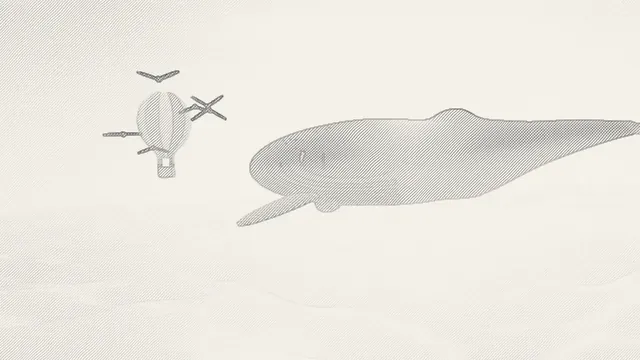
Photo to Pencil Sketch
Photo to sketch converter: pencil outlines and hatched shadows, or clean line art for a coloring page, drawn by filters, not AI. Free; saves PNG, MP4 or GIF.
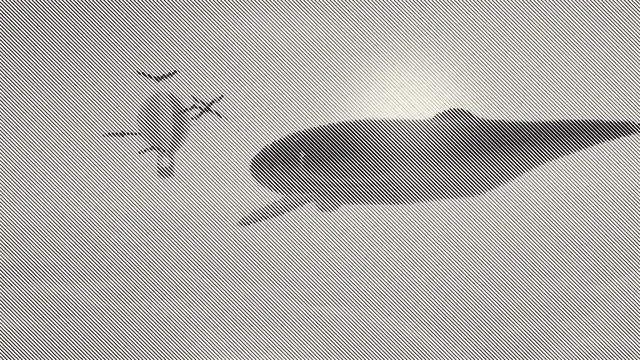
Line Halftone
Line halftone for photos and video: parallel lines that thicken in the shadows and thin out in the highlights, like an engraved print. Exports PNG, MP4 or GIF.