Chiaroscuro
Chiaroscuro is strong light and dark used to model form, from Leonardo and Caravaggio to film noir. Why your brain reads depth from it, and how to light for it.
What is chiaroscuro?
Chiaroscuro is the use of strong contrast between light and dark to make figures and objects look solid and three-dimensional. The word is Italian, from chiaro, light or clear, and scuro, dark.
In a chiaroscuro picture the light usually comes from one direction, so each form has a lit side, a gradual turn into shadow and a dark side that may merge into the background. The gradual turn does most of the work of showing the shape.
From Leonardo to Caravaggio
Leonardo da Vinci was one of the first to make it the basis of a whole painting. In The Virgin of the Rocks the figures emerge from a dim grotto, their faces modeled by soft, smoky shading he called sfumato.
About a century later Caravaggio took the idea to an extreme. His figures are lit by a single hard source, as if from a high window, with the rest of the room in near-total black. That harsher version is often called tenebrism, from the Italian tenebroso, murky. Painters across Europe copied it, among them Rembrandt, whose name is now attached to a portrait lighting setup.
Chiaroscuro in prints
The word also names a printing technique. A chiaroscuro woodcut is printed from two or more blocks: one for the black lines and others for a mid tone, sometimes with the highlights cut away so the paper shows through as white. German printmakers such as Hans Burgkmair and Lucas Cranach were making them by about 1508. In 1516 the Italian Ugo da Carpi asked the Venetian Senate for a privilege on what he presented as his own new way of printing light and dark.
Why does light and shadow make things look solid?
Your brain has to guess the 3D shape of a surface from a flat image, and shading is one of its best clues. It also assumes, without being asked, that light comes from above. A circle that's light at the top and dark at the bottom looks like a bump, and the same circle flipped upside down looks like a dent. The neuroscientist V. S. Ramachandran showed this in experiments published in 1988.
Chiaroscuro feeds that assumption a clear signal. With one strong light and deep shadows, there's only one shape that makes sense, so the form jumps out. Flat, even lighting removes the clue, which is why a face lit by an on-camera flash looks flat.
How to get chiaroscuro in a photo
Start with the lighting: one source to the side and a little above the subject, like a window, and no fill light on the other side. Rembrandt lighting is the portrait version, where the shadow side of the face keeps only a small triangle of light under the eye.
Afterward, the Black and White Converter takes out color so tone carries the picture; push Contrast up and set Gamma below 1, around 0.7, to deepen the shadows. The Vignette Effect's Heavy preset darkens the edges until the background falls away. For a graphic, film noir version, Threshold Image cuts everything to two tones, and its Soft preset keeps a narrow band of gray where light turns into shadow.
Try it
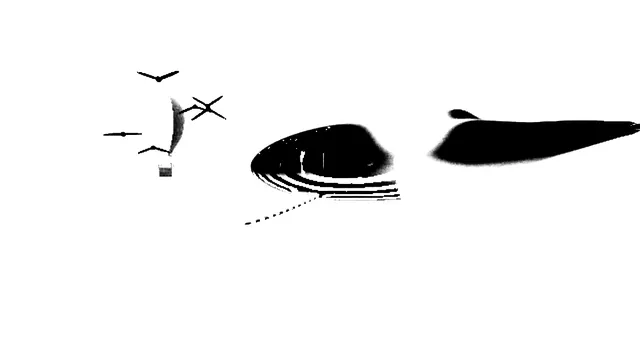
Threshold Image
Threshold an image or video into two flat colors at the brightness you choose, with a hard or soft edge. It all runs in your browser, so nothing is uploaded.
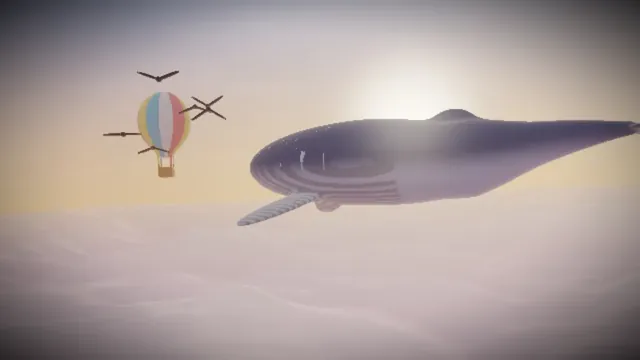
Vignette Effect
Vignette effect for images and video: darken, whiten or fade the edges to transparent, in a round or squarer shape. Exports stills, MP4 and transparent WebM.
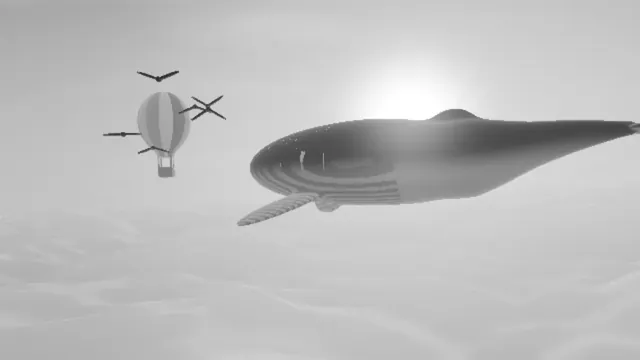
Black and White Converter
Make an image grayscale: turn a photo or video black and white, then tune brightness, contrast and gamma until the grays look right. Files stay on your device.