Cyberpunk Aesthetic
The cyberpunk aesthetic is neon on wet streets, crowded signs, green code and worn high tech. Its roots from Blade Runner to The Matrix, and how to make it.
What is the cyberpunk aesthetic?
The cyberpunk aesthetic is the look of a near future where technology is everywhere and most people living under it are poor: rainy streets lit by neon and video signs, crowded megacities, implants and cables, and screens full of code. Fans sum it up as high tech, low life.
The word came first. Bruce Bethke wrote a short story called Cyberpunk about teenage hackers in 1980, and it ran in Amazing Science Fiction Stories in November 1983. The editor Gardner Dozois then used the term for the new writers around William Gibson, whose Neuromancer (1984) opens on a sky the color of a television tuned to a dead channel.
Where does the cyberpunk look come from?
Mostly from Blade Runner (1982). Ridley Scott's Los Angeles of 2019 is dark, wet and smoky, with video billboards the height of buildings, and the industrial designer Syd Mead, credited as the film's visual futurist, designed its cars and street hardware. Gibson has said he was afraid to watch it while he was writing Neuromancer, in case it looked better than what he had imagined.
Japanese animation and Asian cities supplied the rest. Akira (1988) and Ghost in the Shell (1995) added neon street markets and bodies wired into networks, and photos of Kowloon Walled City in Hong Kong, a dense block demolished in 1993 and 1994, became a favorite reference for game and film designers. The Matrix (1999) brought the falling green code; its designer Simon Whiteley has said he built the characters from Japanese text in his wife's cookbooks.
Why is cyberpunk lit in pink and cyan?
In a cyberpunk scene the sun is gone, hidden by smog or towers, so all the light comes from signs, screens and street lamps, and those are saturated colors. Cinematographers often use two at once, a magenta or red light on one side of a face and a cyan or teal one on the other, since complementary colors give a face shape without daylight. Wet pavement doubles every sign, which is one reason so many scenes are set in the rain.
Grime separates it from synthwave, which shares the neon. Cyberpunk surfaces are scratched and covered in stickers, cables and handwritten notices, and its screens flicker and break up. Synthwave keeps everything clean and sunset-colored.
Building a cyberpunk image
Neon Outline Effect traces the edges of a photo in glowing lines. On its own the picture turns into neon tubing on black; the Over image preset raises Background to 0.4 so the street stays visible under the light. Matrix Rain Effect drops streams of green characters that glow where the picture is bright, and its Portrait preset (Image 1, Backdrop 0, Size 10) draws a face entirely out of code. For a damaged sign or a failing heads-up display, Glitch Effect's Strips preset breaks the frame into thin horizontal bands.
Try it
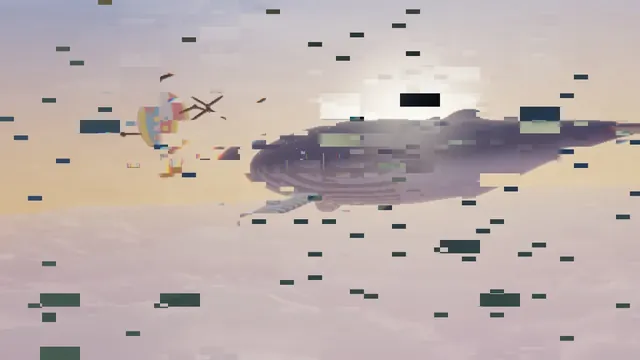
Glitch Effect
Glitch effect for images and video: glitch an image so blocks jump sideways, split into red and blue and turn negative. Seeded, so exports match the preview.

Neon Outline Effect
Trace the edges of a photo or video as a neon outline: glowing tubes in the picture's own colors on a dark background. Export it as a GIF or MP4, free.
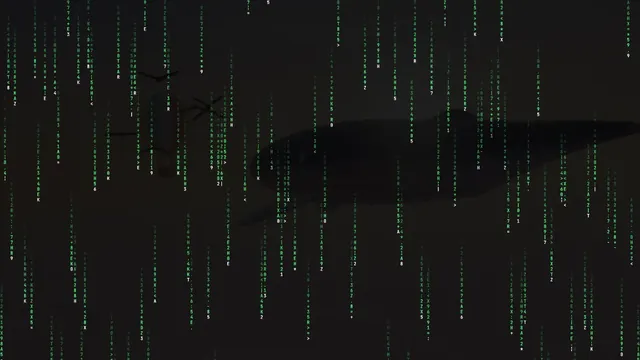
Matrix Rain Effect
Matrix rain effect on your own image or video: falling streams of code that glow where the picture is bright. Seeded, so every export rains the same way.