Caustics
Caustics are the bright curves and nets light draws after a curved surface bends or reflects it, from a pool floor to a coffee cup and even the rainbow itself.
What are caustics?
Caustics are patterns of concentrated light that form when a curved surface bends or reflects rays so they bunch together. The net of light on the floor of a sunny pool, the bright arc inside a mug and the spot under a magnifying glass are all caustics.
The word comes from the Greek for burning, the same root as caustic soda. A burning glass focuses sunlight into one hot point, and that point is the simplest caustic there is. Anything curved and shiny or clear can make one: a wine glass on a tablecloth, a ring on a sheet of paper, the wavy glass of a shower door in the afternoon.
Why is the light brightest along a line?
Picture a bundle of parallel rays hitting a curved mirror. Each ray reflects at a slightly different angle, and the reflected rays cross each other. Along one curve, neighboring rays run almost side by side for a moment, so the light piles up there. Mathematicians call that curve the envelope of the rays, and in pure ray optics its brightness goes to infinity. Real light is a wave, so diffraction blurs it into a fine bright line with faint ripples beside it.
Ehrenfried Walther von Tschirnhaus studied these curves in 1682, which is why the curve made by reflection is still called a catacaustic and the one made by refraction a diacaustic. A rainbow belongs to the same family. Sunlight bending through round raindrops piles up at one angle, roughly 42 degrees from the point opposite the sun, and that pile-up is the bow.
The shape in your coffee cup
The bright cusp at the bottom of a mug in sunlight is often called a cardioid, the heart shape. With a distant light source like the sun it's actually half of a nephroid, a kidney-shaped curve with two cusps, and the side of the cup blocks the other half. You get a true cardioid only when the light sits on the rim of the circle itself, which a phone flashlight held at the edge of the cup gets close to.
In water the same thing happens in two dimensions at once. Every ripple is a weak lens, the lenses shift with the waves, and their envelopes cross into the familiar web of lines. Deeper water lets the rays travel farther before they land, so the web gets coarser and fainter.
Caustics in 3D rendering
Caustics were one of the hardest things for computer graphics to fake. A ray tracer that starts from the camera rarely finds the tiny paths that light took through the glass. Henrik Wann Jensen's photon mapping, published in 1996, fixed that by shooting light from the lamps first and storing where it landed. Real-time games usually skip the physics and scroll a looping caustic texture across the floor of the pool.
How to add caustics to a picture
Water Caustics Effect draws the pool-floor web over a photo or a clip and makes the picture under it waver. For sunlight in a hand's depth of water, start from Shallows, which sets Scale to 3.5 and Highlights to 1. For a dim, deep blue, Deep drops Scale to 1 and pushes Refraction to 0.5.
The rainbow kind of caustic, where white light fans out into colors, is closer to what Prism Effect does. Rainbow edge spreads the colors toward the frame's border and leaves the middle clean.
Try it
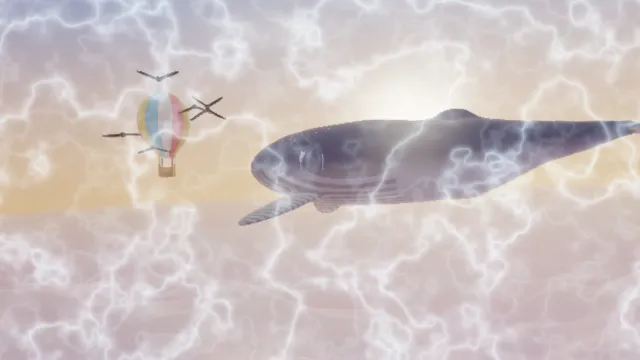
Water Caustics Effect
Water caustics effect for photos and video: rippling threads of sunlight from a pool or shallow sea, with the picture wobbling underneath. Loops for video.

Prism Effect
Prism effect for photos and video: colors split into rainbow fringes that smear away from the center or along one direction, with fisheye or pinched glass.